What Kling AI gives you for a whole season Kling AI (kling.ai) documents elements that carry a character's appearance and voice between generations, which is the cast half of season work. Nothing is published about splitting a script into episodes or assembling one. As of 2026-09-12.
Steps each tool documents Filled where the tool publishes a mechanism for that step, hollow where it publishes nothing on it. Steps each tool documents What the vendor publishes What the vendor publishes Kind of evidence Cross-episode cast Cross-episode cast — What the vendor publishes: Elements carry appearance and voice between generations Cross-episode cast — Kind of evidence: Documented Script to episodes Script to episodes — What the vendor publishes: Nothing published Script to episodes — Kind of evidence: - Assembling an episode Assembling an episode — What the vendor publishes: Nothing published Assembling an episode — Kind of evidence: - Fig. 1 Filled where the tool publishes a mechanism for that step, hollow where it publishes nothing on it.The three season-scale steps, for Kling AI. Read from the vendor's model guide on 2026-09-12. Step What the vendor publishes Kind of evidence Cross-episode cast Elements carry appearance and voice between generations Documented Script to episodes Nothing published - Assembling an episode Nothing published -
Inclusion rule. The same three steps are recorded for every tool here. A step the vendor does not publish is recorded as nothing published rather than inferred from the interface. Order. Fixed step order, identical on every tool page.
1 The same step, across every tool hereCross-episode cast: who publishes a mechanism One step at a time, every tool side by side, Kling AI marked. Hollow means the vendor publishes nothing on that step, not that the tool cannot do it. Wording in the rows below. Rows read between 2026-09-12 and 2026-09-22. Cross-episode cast: who publishes a mechanism Cross-episode cast AI Drama Generator — Cross-episode cast: Consistent characters listed among the outputs, with no mechanism named AI Drama Generator AI Dramas — Cross-episode cast: Each character saved with a name, a face and a voice style, then called by name in every script AI Dramas Anijam — Cross-episode cast: Locking characters' faces across every episode stated as an action the tool performs Anijam Arcloop — Cross-episode cast: Locking a face, outfit, personality and visual identity listed as a step, with no object named Arcloop character.app — Cross-episode cast: A recurring Cast and World described as objects the series is built on character.app Crano AI — Cross-episode cast: The same identity stated to hold across episodes, with stable appearance and emotional presence Crano AI DramaSo — Cross-episode cast: Consistent characters listed among the outputs, with no mechanism named DramaSo Dramily — Cross-episode cast: Character dynamics, scenes and props turned into reusable assets Dramily Genra — Cross-episode cast: Cast cards holding a face and a voice, stated to carry across every scene Genra Google Flow — Cross-episode cast: Ingredients, the same images reused for a character and key objects from one clip to the next Google Flow invideo AI — Cross-episode cast: Project memory holds character sheets and locations invideo AI Kling AI — Cross-episode cast: Elements carry appearance and voice between generations Kling AI LTX Studio — Cross-episode cast: Elements are reusable across projects LTX Studio Luma Agents — Cross-episode cast: Characters, products and brand elements defined once and preserved across named operations Luma Agents Medeo — Cross-episode cast: Consistency attributed to the video model the product runs on Medeo Novi AI — Cross-episode cast: A character created in the product, whose appearance the system locks for the whole project Novi AI OpenArt — Cross-episode cast: Leads stated to stay the same across every episode, face, wardrobe and chemistry OpenArt Pexo — Cross-episode cast: Hyperframe, named as what locks a face, wardrobe and voice across every episode Pexo PopShort AI — Cross-episode cast: Characters, scenes and props stored as reusable production assets, from Episode 1 to Episode 50 PopShort AI SceneMixer — Cross-episode cast: Reference sheet per character, crops injected into every segment SceneMixer Showrunner Studio — Cross-episode cast: Sets, characters and canon stated to persist across the whole series Showrunner Studio StoryShort — Cross-episode cast: Casting consistent characters listed as a step, with no mechanism named StoryShort Topview — Cross-episode cast: Characters and scenes stated to be built before video generation, to help continuity Topview TrendShort — Cross-episode cast: Locking identity, wardrobe, face and emotional range listed as a step TrendShort Vidu — Cross-episode cast: One to seven reference images supplied per call Vidu Fig. 2 One step at a time, every tool side by side, Kling AI marked. Hollow means the vendor publishes nothing on that step, not that the tool cannot do it. Wording in the rows below. Rows read between 2026-09-12 and 2026-09-22.Every tool on one step, with Kling AI marked. Rows read between 2026-09-12 and 2026-09-22. Tool Cross-episode cast AI Drama Generator Consistent characters listed among the outputs, with no mechanism named AI Dramas Each character saved with a name, a face and a voice style, then called by name in every script Anijam Locking characters' faces across every episode stated as an action the tool performs Arcloop Locking a face, outfit, personality and visual identity listed as a step, with no object named character.app A recurring Cast and World described as objects the series is built on Crano AI The same identity stated to hold across episodes, with stable appearance and emotional presence DramaSo Consistent characters listed among the outputs, with no mechanism named Dramily Character dynamics, scenes and props turned into reusable assets Genra Cast cards holding a face and a voice, stated to carry across every scene Google Flow Ingredients, the same images reused for a character and key objects from one clip to the next invideo AI Project memory holds character sheets and locations Kling AI Elements carry appearance and voice between generations LTX Studio Elements are reusable across projects Luma Agents Characters, products and brand elements defined once and preserved across named operations Medeo Consistency attributed to the video model the product runs on Novi AI A character created in the product, whose appearance the system locks for the whole project OpenArt Leads stated to stay the same across every episode, face, wardrobe and chemistry Pexo Hyperframe, named as what locks a face, wardrobe and voice across every episode PopShort AI Characters, scenes and props stored as reusable production assets, from Episode 1 to Episode 50 SceneMixer Reference sheet per character, crops injected into every segment Showrunner Studio Sets, characters and canon stated to persist across the whole series StoryShort Casting consistent characters listed as a step, with no mechanism named Topview Characters and scenes stated to be built before video generation, to help continuity TrendShort Locking identity, wardrobe, face and emotional range listed as a step Vidu One to seven reference images supplied per call
Inclusion rule. Tools whose public pages describe at least one of the three season-scale steps. A tool silent on this particular step keeps its row, marked hollow. Order. Alphabetical by tool name.
Script to episodes: who publishes a mechanism One step at a time, every tool side by side, Kling AI marked. Hollow means the vendor publishes nothing on that step, not that the tool cannot do it. Wording in the rows below. Rows read between 2026-09-12 and 2026-09-22. Script to episodes: who publishes a mechanism Script to episodes AI Drama Generator — Script to episodes: The narrative stated to be structured automatically into episodes, scenes, dialogue and beats AI Drama Generator AI Dramas — Script to episodes: Nothing published on a script being split; scenes are written one at a time by the user AI Dramas Anijam — Script to episodes: Multi-episode short drama and one-to-two-minute micro drama both stated as supported Anijam Arcloop — Script to episodes: Recurring episodes with consistent characters given as the output Arcloop character.app — Script to episodes: Story setup and connected Scenes named as stages character.app Crano AI — Script to episodes: Repeatable episode structures described as something the user builds Crano AI DramaSo — Script to episodes: A season of up to 60 episodes stated as plannable from one premise DramaSo Dramily — Script to episodes: Episode scripts drafted from an idea, with a project stated to run to 120 episodes Dramily Genra — Script to episodes: Structured episode outlines and scene breakdowns, described on the vendor's blog Genra Google Flow — Script to episodes: Nothing published Google Flow invideo AI — Script to episodes: An agent plans a season episode by episode invideo AI Kling AI — Script to episodes: Nothing published Kling AI LTX Studio — Script to episodes: Organised per production, no episode structure LTX Studio Luma Agents — Script to episodes: Characters, story arcs and episode boards developed on the board, then a pilot Luma Agents Medeo — Script to episodes: Turning one story into numbered parts, recap clips and next-episode teasers Medeo Novi AI — Script to episodes: Serialized mini-dramas stated to be creatable from scripts, novels or story outlines Novi AI OpenArt — Script to episodes: A director feature stated to structure a story into episodes and scenes OpenArt Pexo — Script to episodes: An open loop at the end of one cut carries the cast into the next Pexo PopShort AI — Script to episodes: A script or novel uploaded into Drama Canvas, with characters, scenes and props extracted PopShort AI SceneMixer — Script to episodes: One upload analysed into characters, scenes, props and episodes SceneMixer Showrunner Studio — Script to episodes: A written scene stated to return an episode, and a show shaped into a season Showrunner Studio StoryShort — Script to episodes: Scene-by-scene writing and a named beat order: hook, escalation, reveal, cliffhanger StoryShort Topview — Script to episodes: Nothing published Topview TrendShort — Script to episodes: A script, draft or outline broken into shots, beats and visual prompts, one level below episodes TrendShort Vidu — Script to episodes: Nothing published Vidu Fig. 3 One step at a time, every tool side by side, Kling AI marked. Hollow means the vendor publishes nothing on that step, not that the tool cannot do it. Wording in the rows below. Rows read between 2026-09-12 and 2026-09-22.Every tool on one step, with Kling AI marked. Rows read between 2026-09-12 and 2026-09-22. Tool Script to episodes AI Drama Generator The narrative stated to be structured automatically into episodes, scenes, dialogue and beats AI Dramas Nothing published on a script being split; scenes are written one at a time by the user Anijam Multi-episode short drama and one-to-two-minute micro drama both stated as supported Arcloop Recurring episodes with consistent characters given as the output character.app Story setup and connected Scenes named as stages Crano AI Repeatable episode structures described as something the user builds DramaSo A season of up to 60 episodes stated as plannable from one premise Dramily Episode scripts drafted from an idea, with a project stated to run to 120 episodes Genra Structured episode outlines and scene breakdowns, described on the vendor's blog Google Flow Nothing published invideo AI An agent plans a season episode by episode Kling AI Nothing published LTX Studio Organised per production, no episode structure Luma Agents Characters, story arcs and episode boards developed on the board, then a pilot Medeo Turning one story into numbered parts, recap clips and next-episode teasers Novi AI Serialized mini-dramas stated to be creatable from scripts, novels or story outlines OpenArt A director feature stated to structure a story into episodes and scenes Pexo An open loop at the end of one cut carries the cast into the next PopShort AI A script or novel uploaded into Drama Canvas, with characters, scenes and props extracted SceneMixer One upload analysed into characters, scenes, props and episodes Showrunner Studio A written scene stated to return an episode, and a show shaped into a season StoryShort Scene-by-scene writing and a named beat order: hook, escalation, reveal, cliffhanger Topview Nothing published TrendShort A script, draft or outline broken into shots, beats and visual prompts, one level below episodes Vidu Nothing published
Inclusion rule. Tools whose public pages describe at least one of the three season-scale steps. A tool silent on this particular step keeps its row, marked hollow. Order. Alphabetical by tool name.
Assembling an episode: who publishes a mechanism One step at a time, every tool side by side, Kling AI marked. Hollow means the vendor publishes nothing on that step, not that the tool cannot do it. Wording in the rows below. Rows read between 2026-09-12 and 2026-09-22. Assembling an episode: who publishes a mechanism Assembling an episode AI Drama Generator — Assembling an episode: Nothing published AI Drama Generator AI Dramas — Assembling an episode: Clips of 4 to 15 seconds chained into an episode, with a draft rate and an episode-cut rate AI Dramas Anijam — Assembling an episode: Assembling everything on a timeline stated as part of the flow Anijam Arcloop — Assembling an episode: Nothing published Arcloop character.app — Assembling an episode: Film assembly named as a stage character.app Crano AI — Assembling an episode: Nothing published Crano AI DramaSo — Assembling an episode: A captioned episode stated as the export DramaSo Dramily — Assembling an episode: Export-ready episodes listed among the outputs of one workspace Dramily Genra — Assembling an episode: Export stated at 1080p; nothing published about joining shots Genra Google Flow — Assembling an episode: Nothing published Google Flow invideo AI — Assembling an episode: Nothing published invideo AI Kling AI — Assembling an episode: Nothing published Kling AI LTX Studio — Assembling an episode: Nothing published LTX Studio Luma Agents — Assembling an episode: Nothing published Luma Agents Medeo — Assembling an episode: Nothing published Medeo Novi AI — Assembling an episode: Nothing published Novi AI OpenArt — Assembling an episode: Each vertical episode stated as exportable ready to publish OpenArt Pexo — Assembling an episode: Nothing published Pexo PopShort AI — Assembling an episode: Nothing published PopShort AI SceneMixer — Assembling an episode: Composited from segments, 1 credit per second of output SceneMixer Showrunner Studio — Assembling an episode: Publishing straight from the product named as a step Showrunner Studio StoryShort — Assembling an episode: Clips stated as assembled into one vertical episode StoryShort Topview — Assembling an episode: Nothing published Topview TrendShort — Assembling an episode: A 9:16 vertical cut with captions and voiceover named as the export target TrendShort Vidu — Assembling an episode: Nothing published Vidu Fig. 4 One step at a time, every tool side by side, Kling AI marked. Hollow means the vendor publishes nothing on that step, not that the tool cannot do it. Wording in the rows below. Rows read between 2026-09-12 and 2026-09-22.Every tool on one step, with Kling AI marked. Rows read between 2026-09-12 and 2026-09-22. Tool Assembling an episode AI Drama Generator Nothing published AI Dramas Clips of 4 to 15 seconds chained into an episode, with a draft rate and an episode-cut rate Anijam Assembling everything on a timeline stated as part of the flow Arcloop Nothing published character.app Film assembly named as a stage Crano AI Nothing published DramaSo A captioned episode stated as the export Dramily Export-ready episodes listed among the outputs of one workspace Genra Export stated at 1080p; nothing published about joining shots Google Flow Nothing published invideo AI Nothing published Kling AI Nothing published LTX Studio Nothing published Luma Agents Nothing published Medeo Nothing published Novi AI Nothing published OpenArt Each vertical episode stated as exportable ready to publish Pexo Nothing published PopShort AI Nothing published SceneMixer Composited from segments, 1 credit per second of output Showrunner Studio Publishing straight from the product named as a step StoryShort Clips stated as assembled into one vertical episode Topview Nothing published TrendShort A 9:16 vertical cut with captions and voiceover named as the export target Vidu Nothing published
Inclusion rule. Tools whose public pages describe at least one of the three season-scale steps. A tool silent on this particular step keeps its row, marked hollow. Order. Alphabetical by tool name.
2 A cast system without a season around itElements solve the hardest part of serial production honestly: a character defined once keeps its appearance and its voice across separate generations, so consistency is a property of the definition rather than of the prompt. On the evidence published, this is the most concrete cross-episode mechanism in the register.
What surrounds it is not there. A script does not become a set of episodes, and a set of generated shots does not become a finished episode, inside this product. Both steps happen somewhere else, which is a workflow decision rather than a gap, but it decides what the tool is for.
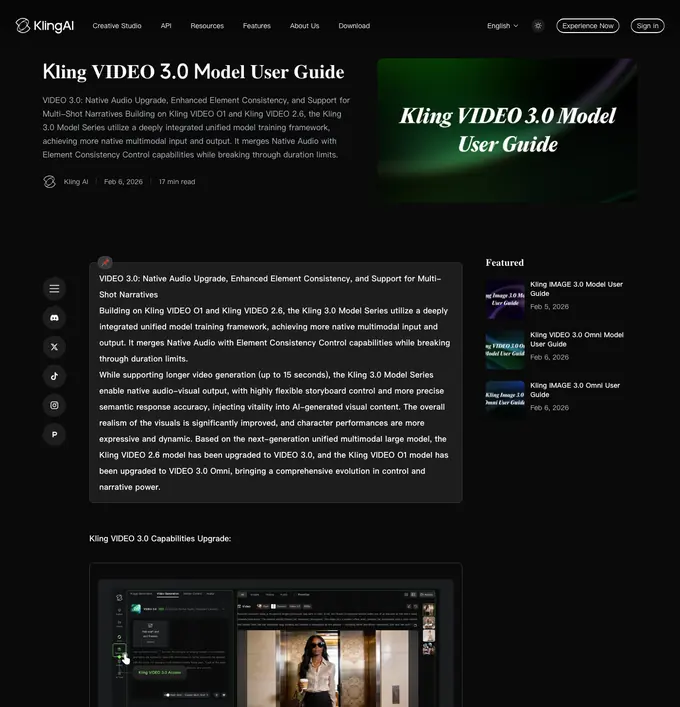
Fig. 5 A model guide rather than a marketing page, which is where the element system is described in the vendor's own terms.Screenshot of kling.ai/quickstart, captured 2026-09-16. Reproduced to show where this entry was read from. 3 What that means for a forty-episode runThe cast holds; the structure does not. A production using this tool keeps its episode breakdown, its shot list and its assembly in other software, and uses the model for the shots. That is a perfectly workable division of labour and it is a different job from the one a pipeline tool is doing.
Nothing published states a limit on how many elements a project can hold or how long a definition persists, so neither is recorded here.
4 This page, read column by columnEach reading below takes one column, quotes the sentence this vendor published on it, and says what the sentence declines to settle.
Kling AI on the cast — Characters defined as elements carry their appearance and their voice between generations, which puts audio inside the same object as picture.5 SourcesRead from the model guide at kling.ai , checked 2026-09-12. Every tool on the same three steps is in the register ; what counts as published is on how read .
Cross-episode cast Characters defined as elements carry their appearance and voice between generations per element Kling AI, model guide / recorded 2026-09-12Script to episodes Nothing published (as of 2026-09-12) no such feature documented Kling AI, model guide / recorded 2026-09-12